March 1, 2009
Not Without HopeMarch 1, 2009 is the central date of the 2009 Clearwater boating accident and the book’s decisive hinge between an offshore fishing trip and its aftermath. By the early hours of that Sunday, Marquis Cooper’s twenty-one-foot Everglades fishing boat was overdue, four men were missing in the Gulf of Mexico, and the Coast Guard was beginning a search that would end with the deaths of Marquis Cooper, Corey Smith, and Will Bleakley and the rescue of Nick Schuyler.
A Date Defined by Disaster
March 1 began while the four men were still stranded on the overturned boat. The previous afternoon, Marquis Cooper had tried to retrieve an anchor that would not budge from the seabed. After the men pulled from different directions and Marquis maneuvered the boat around the anchor for roughly half an hour, the anchor line was placed at the stern and the boat was throttled forward in an effort to free it. The Florida Fish and Wildlife Conservation Commission later identified three linked causes: the improper attachment of the anchor line to an eye bracket on the port side of the transom, the attempt to move forward against the stuck anchor, and insufficient slack in the line. The stern submerged, and the boat capsized.
The date therefore records more than a sudden change in weather or a single mechanical failure. It marks the point at which several defenses failed together: the worsening sea state, the decision to continue struggling with the anchor, inadequate preparation for sending a distress signal, insufficient knowledge of the boat’s exact position among people at home, and the absence of readily used life jackets. In retrospect, the disaster was not explained by one careless instant alone, but by an accident chain that turned an ordinary return voyage into a fight against the boat, the weather, cold water, and diminishing human capacity.
The Search Unfolds on Sunday
At about 1:27 a.m. on March 1, Paula Oliveira, Nick Schuyler’s girlfriend, discovered that Nick was not home and that his phone went directly to voice mail; Will Bleakley’s phone rang once before doing the same. At the St. Petersburg Coast Guard station, Brian Miller reported that the boat had left the Seminole Boat Ramp in Clearwater and was apparently headed toward a dive wreck fifty nautical miles west of Clearwater Pass. The initial report mistakenly described only two other passengers and said that the men had little maritime experience. Because the vessel was beyond the range of the Coast Guard’s communications towers, repeated calls on VHF Channel 16 produced no response.
At 2:37 a.m., seventy minutes after the boat was declared overdue, the case was upgraded from alert to distress. Captain Timothy Close emphasized that the men had never remained offshore that late at that distance, that the weather was deteriorating, and that the water temperature was approximately sixty-four degrees. By 6:38 a.m., dispatchers were considering a search closer to shore and asking relatives to check credit-card activity, while also recommending that the missing-boater story reach the media quickly. The uncertainty was practical as well as emotional: rescuers did not yet know whether the men had stayed near land, how much fuel remained, or where the boat had actually been left.
Just after sunrise, the first HH-60 Jayhawk helicopter was launched at 7:09 a.m. and reached the search area at 7:45. A forty-seven-foot motor lifeboat arrived near the supplied GPS coordinates at 7:10, but the sea was running eight to ten feet, with some waves reaching twelve feet; the wind was thirty miles per hour and visibility was only half a mile. The first search by boat found nothing. The date thus contains a widening contrast between the urgency felt by families and the delays imposed by distance, bad weather, incomplete information, and the limits of search equipment.
A Physiological Timeline
March 1 also functions as a record of the men’s physical deterioration. After the capsizing, swallowing salt water threatened to produce a dangerous sodium imbalance, drawing water out of cells and potentially leading to delirium, seizures, cardiac failure, and death through dehydration. Cold-water immersion created a second, overlapping threat. As body temperature fell below ninety-five degrees, circulation narrowed toward the body’s core; shivering could progress to clumsiness, shallow breathing, blue lips, confusion, slurred speech, and irrational or confrontational behavior.
The book stresses that physical fitness did not guarantee safety. A younger, muscular man could lose heat quickly because he had less insulating body fat and less natural flotation. A military survival guide estimated that an average twenty-five-year-old immersed in sixty-five-degree water might remain functional for 9.9 hours and survive for fifteen hours, while a fifty-year-old might remain functional for 11.6 hours and survive for 17.6 hours. The men’s football bodies, useful in short bursts of intense exertion, were not necessarily suited to hours of treading water in cold seas.
Around 2:30 a.m., Marquis Cooper’s responses to calls became slower, his speech began to slur and ramble, and constant teeth-chattering followed extensive salt-water exposure and dry heaving. Later, Corey Smith displayed comparable symptoms. Around 5:00 a.m., after twelve hours in the water, he suddenly exerted desperate energy, trying repeatedly to climb onto the overturned hull and pulling at Marquis Cooper’s legs. His behavior became physically aggressive and unfamiliar to Nick Schuyler, who understood it as the cold taking hold rather than a deliberate expression of Corey’s character.
The medical explanation supplied later prevents the deaths from being read as simple surrender. Dr. Mark Rumbak explained that hypothermia can cause delirium, falling potassium levels, and deterioration of the heart’s cell membranes until the heart can no longer contract. The men were confused as their bodies failed; according to Rumbak, binding them to the boat would not necessarily have saved them, because their hearts might have stopped before rescuers arrived. On the same date, Nick himself was eventually found with a body temperature of 89.5 degrees, labored breathing, blue lips, cool clammy skin, leg pain, and early signs of shock.
Families, Prayer, and the Meaning of the Date
While the search continued, March 1 became an intimate day of waiting for those on land. Paula went to St. Paul’s Catholic Church in Tampa, although she no longer practiced regularly, and prayed for Nick, Will, Marquis, and Corey to return safely. Late that morning, the Coast Guard warned her that the media would be alerted and that the agency was confirming four missing men rather than three, including two NFL players. At 9:59 a.m., Marcia Schuyler sent Nick a text telling him that she loved him, that he would be safe, and that he made her proud. The message was not delivered until March 5, but she kept it on her phone for eight months.
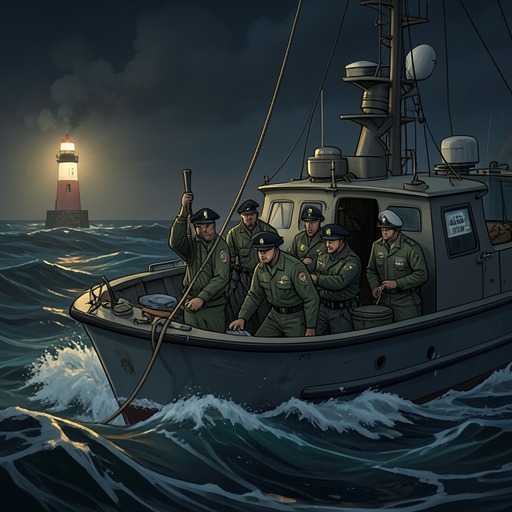
At approximately 2:40 p.m., the Coast Guard cutter USCGC Tornado was diverted 230 miles north from routine patrol in the Florida Straits, off the coast of Cuba, to join the search off Tampa–St. Petersburg. Its ordinary duties included law enforcement against illegal immigration, drugs, and illegal fishing, as well as safety checks on commercial and recreational vessels. The crew learned that the new mission concerned four missing football players, but the significance of the date was not yet known to them as they traveled toward the search area.
For Nick, the day ended in prayer and near collapse. As his heart rate slowed and his breathing became frighteningly shallow, he spoke final words asking God to protect his family, strengthen his father, help his sister find love and protection, and give Paula strength while assuring her that he had always loved and appreciated her. The prayer gathers the day’s competing pressures into a single emotional register: the immediate threat of death, unfinished family obligations, romantic attachment, and the need to make meaning before consciousness failed.
Memorial, Memory, and Permanent Marker
The three men who died on March 1 were not understood by the book as people who simply chose to give up. Their deaths became the source of a painful moral contrast for Nick, especially at Will Bleakley’s funeral. Nick believed Will had done everything possible to prolong his life and that he remained alive partly because of Will’s efforts. He sent Will’s family flowers with a card calling him the angel who saved his life. At the funeral, however, gratitude was inseparable from guilt: Nick wondered whether he could have performed better CPR, shared his jacket, or helped Will beneath the boat.
The date also became a formal memorial object. Nick’s tattoo, delayed for three months while his atrophied arm regained strength, placed the initials of Marquis Cooper, William Ward Bleakley, and Corey Dominic Smith on the points of a Celtic cross. A rope intertwined the cross, an anchor rested at its base, and the date 3/1/2009 appeared below it. Behind the design was the phrase “In the hour of adversity, be not without hope.” The date of death was therefore joined to a statement of collective endurance: the four men had worked together, and Nick understood his survival as inseparable from that shared effort.
March 1 remains both a calendar entry and a recurring psychological presence. It names the day when the anchor line pulled the stern under, when a search began across violent seas, when families waited without reliable information, and when three lives ended while one continued. Its later significance lies in the refusal to reduce the disaster to either heroic survival or personal failure. The date holds the whole chain together: preventable conditions, physiological limits, organized rescue, bereavement, survivor’s guilt, and the continuing work of remembering the men who did not come home.